Log Splitters: The UK Buyer's Guide
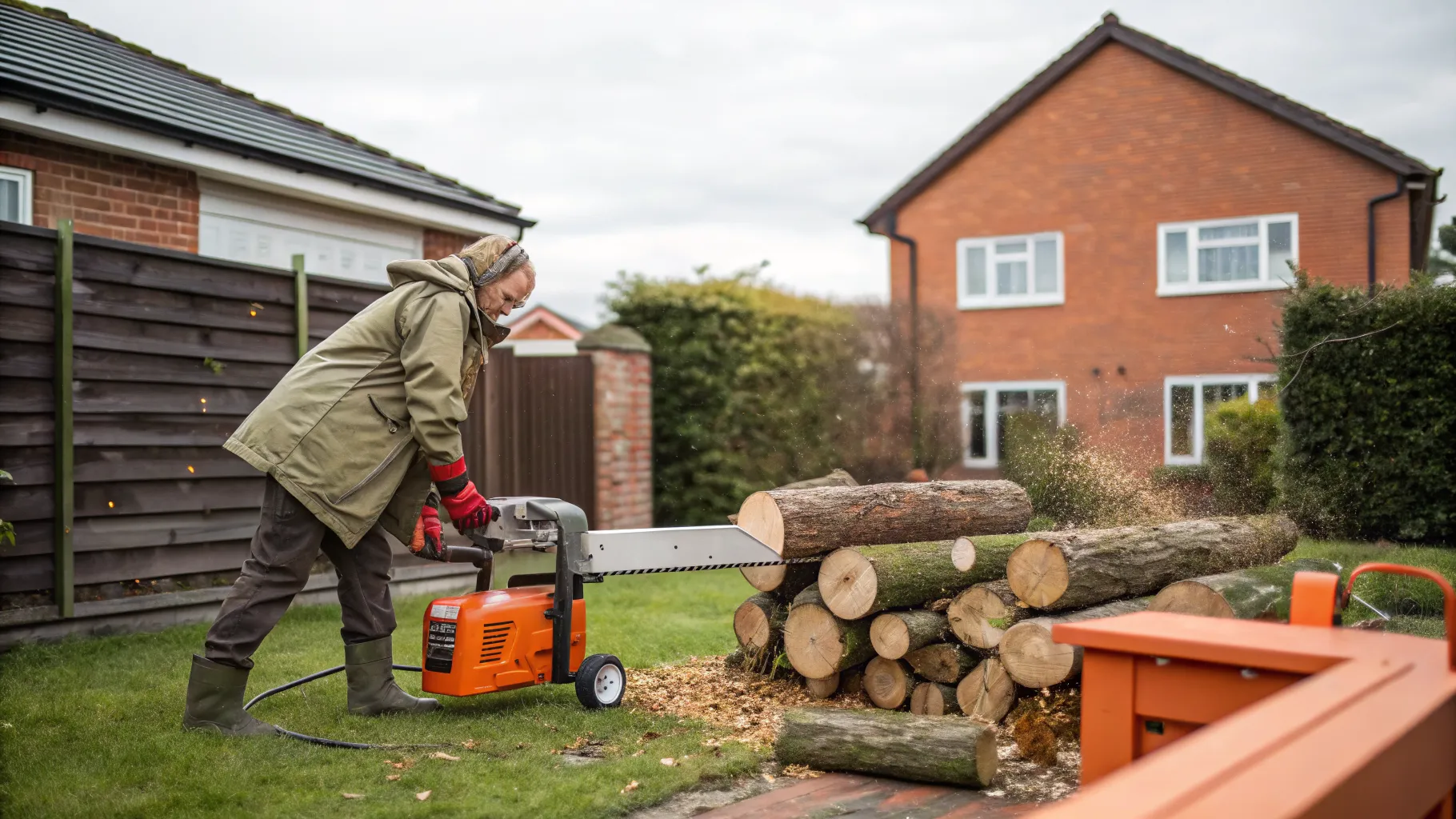
A log splitter is a hydraulic machine that drives a log against a steel wedge and splits it for you, so you are not swinging an axe all afternoon. For a stove owner processing a few cubic metres of firewood a year, it turns a tiring weekend job into an hour of standing still.
You do not always need one. If you split a small amount of soft, straight-grained wood, a decent maul or a Fiskars splitting axe is cheaper, faster to grab and needs no power. A machine starts to pay off when the volume climbs, when your wrists have had enough, or when you are dealing with knotty hardwood that bounces an axe straight back at you. That last point matters more than most buyers realise: it is grain and knots that beat a splitter, not log width.
This is the hub for everything we cover on splitters. Below is the plain-English version of what the types are, how much force you actually need in the UK, and what to check before you buy.
Types of log splitter
There are four kinds sold in the UK, and most stove owners only ever look at two of them.
Manual hydraulic. A hand-lever or foot-pedal unit, usually up to around 10 tonne of force but slow to pump. It is the cheapest and lightest option, with no cord and no fumes, so it suits a small garden or an occasional user. The downside is obvious once you have split a barrow-load: it is tiring and slow.
Electric hydraulic. The mainstream domestic choice. It plugs into a normal 230V socket and does the work for you at the push of a control. Quiet enough for a residential garden, no fuel, and powerful enough for the firewood most UK households actually burn. This is where the majority of buyers should be looking.
Petrol hydraulic. More force and no cord, so you can split out in a field or a far corner of a smallholding. It is the answer for high volume or off-grid work, but it is louder, needs engine maintenance and is overkill for the average stove.
PTO or tractor-mounted. Driven off a tractor’s power take-off. Only relevant if you already farm or run a smallholding with a tractor to hand.
For hand tools, brands like Draper and Fiskars sell good mauls, wedges and splitting axes, and Draper also makes entry-level electric splitters in the 4 tonne class if you want a budget powered unit.
How much power do you need
Short answer: far less than American guides tell you. Plenty of US content insists you need 20 to 35 tonne for green wood. That figure comes from people splitting enormous rounds, and it is wrong for UK domestic firewood.
For a typical British wood-burner, 5 to 7 tonne is the sweet spot, with the practical domestic range running from about 4 to 10 tonne. Tie the choice to wood type rather than diameter. Soft, green, straight-grained logs split easily on a 4 or 5 tonne unit; fibrous, knotty or twisted hardwood such as elm, fruitwood or gnarled oak is what calls for 7 tonne and up.
For the full breakdown by wood type and how to read a tonnage figure, see what tonnage log splitter do I need.
One thing worth keeping separate in your head: wood is generally easiest to split when freshly cut and green, before it seasons. That is the opposite of the burning rule. You still must season logs down to 20% moisture or buy Ready to Burn before you put them on the stove. Split green if you can, burn dry only.
What to look for
Hold any splitter you are considering against this checklist.
- Tonnage: match it to your hardest wood, not your easiest. 5 tonne for soft and mixed, 7 tonne and up for knotty hardwood.
- Max log length and diameter: most horizontal domestic units take around 500 to 520mm long and up to roughly 250mm diameter. Measure your usual rounds first.
- Motor and duty cycle: most domestic electric units run a 2,200W (2.2kW) motor on a standard 13A plug. Cycle time matters more than people expect: a mid-range unit runs roughly a 12-second push and 7-second return. Treat marketing claims of “splits any wood” with caution, as real-world speed drops under load.
- Vertical or horizontal: horizontal suits the 5 to 7 tonne electric class and is the common domestic format. Vertical designs, mostly higher-tonnage petrol, let you split heavy logs you cannot lift onto a bench and save your back.
- Stand height: a unit at ground level means a lot of bending. Some models include a stand, others sell it separately, so factor that in.
- Two-hand safety: every reputable UK unit uses two-hand operation, with both hands occupied and clear of the wedge, plus a mesh guard or cage. Never bypass the guard, and never reach in to free a stuck log while the machine is powered. On a 2,200W motor, avoid thin or long extension leads that starve the circuit.
Look for UKCA or CE compliance as your baseline conformity standard.
In this section
Three guides take this further, each written for stove owners rather than generic gardeners.
- Best electric log splitter UK: our pick of the verified mains-powered units that earn their place in a domestic woodshed.
- What tonnage log splitter do I need: how to match force to your wood type and annual volume, with the 20-tonne myth put to bed.
- Log splitter won’t start or ram won’t return: the common faults, what causes them, and how to get a stalled machine working again.
As an Amazon Associate we earn from qualifying purchases. See our affiliate disclosure for how that works.
Frequently asked questions
How many tonnes of log splitter do I actually need for a domestic wood-burner?
For most UK stove owners, 5 to 7 tonne covers it. Go to 5 tonne for soft and mixed straight-grained wood, and step up to 7 tonne or more if you regularly split knotty hardwood like oak, ash or elm. Ignore American advice telling you to buy 20 tonne plus, as that is aimed at far bigger rounds than UK firewood.
What’s the difference between electric, petrol and manual log splitters?
Manual hydraulic units are cheapest and lightest but slow and tiring. Electric hydraulic is the mainstream domestic pick: plug it into a normal socket and it does the work, quietly and with no fuel. Petrol gives you more force and full portability for high volume or off-grid use, at the cost of noise and engine upkeep. For a household burning a few cubic metres a year, electric is almost always the right call.
Are electric log splitters any good, or should I just use an axe?
They are genuinely good once your volume rises. A maul or Fiskars splitting axe is cheaper and faster to grab for a small amount of soft wood. A machine earns its keep when you are processing larger volumes, when knotty wood keeps defeating the axe, or when your hands and back have had enough. Many owners keep both and reach for the axe for kindling.
Can a log splitter split green or wet wood, and which is easier to split?
Yes, and green wood is usually the easier of the two to split, since seasoning makes knotty hardwood tougher. Just keep this separate from burning: you split green for ease, but you only burn wood once it is seasoned to 20% moisture or sold as Ready to Burn. Splitting green and stacking it actually helps it dry faster.
Will a 5 or 7 tonne splitter cope with knotty hardwood like oak and elm?
A 5 tonne unit handles most straight-grained logs fine but can stall on twisted or knotty pieces. For regular hardwood with awkward grain, a 7 tonne unit gives you more headroom. Even so, very gnarled or fibrous wood can defeat any electric splitter, so a few stubborn rounds may still need a wedge and a maul.
Why does my log get stuck on the wedge, and how do I free it?
This usually happens with twisted grain or a log that only partly splits, then grips the wedge as the ram returns. Power down before you touch anything, then work the log free, often by repositioning it and running the cycle again from the other end. Never reach towards the wedge while the machine is live. If the ram itself will not return, see our troubleshooting guide.
Can I run an electric log splitter off a normal house socket?
Yes. Most domestic units draw around 2,200W and run happily on a standard 13A 230V plug. The thing to watch is extension leads: a thin or very long lead drops the voltage and can make the motor struggle or trip. Use a short, heavy-gauge lead, or plug straight into the socket.
How heavy are these machines, and can one person move them?
Domestic electric units commonly land somewhere around 45 to 60kg. One person can shift them, but they are not light, and the heavier 6 and 7 tonne models are a two-handed lift or a job for the wheels if the model has them. If you will be moving it in and out of a shed often, check the weight and whether it has built-in wheels before you buy.
Want the seasoning calendar and our log-price watch in your inbox?
Join the Kindling List